
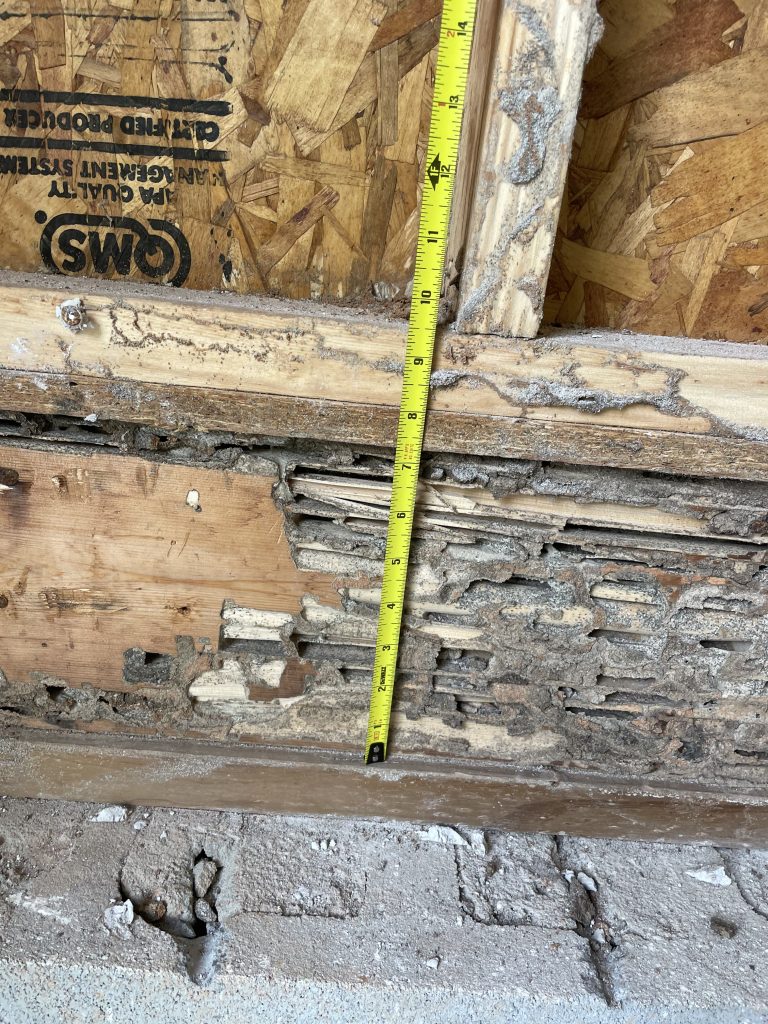
Termite Damage Repair (Structural Framing Under the Home)
In the North Carolina, termite damage is common, not because homes are built “wrong,” but because we build where termites thrive: in the soil, close to moisture, surrounded by wood. The important part is this: termite damage doesn’t mean you have to give up on your house. It means the damaged structural wood needs to be identified, evaluated, and repaired correctly. We specialize in termite damage repair under the house, including replacing compromised framing members so the structure is strong and stable again.
Signs You May Have Termite Damage Under the House:
- Mud tubes on foundation walls, piers, or framing
- Soft, hollow-sounding, or visibly damaged wood
- Floors that feel bouncy, uneven, or sagging
- Doors that start sticking or frames shifting (sometimes)
- A moisture-heavy crawlspace (which increases risk)
Get Your Free Estimate
Tell us what you’re seeing. We’ll call to set up a free inspection.
How Termite Damage Works
Termites can do a lot of damage, but the good news is that damaged wood can be repaired.In simple terms:If termites damaged a structural board, the fix is to replace or rebuild that board with sound wood, then make sure the load is supported correctly. Because framing is carrying the home, the repair has to be done safely and in the correct order. That’s where structural repair expertise matters.
What We Typically Repair Or Replace (As Needed):
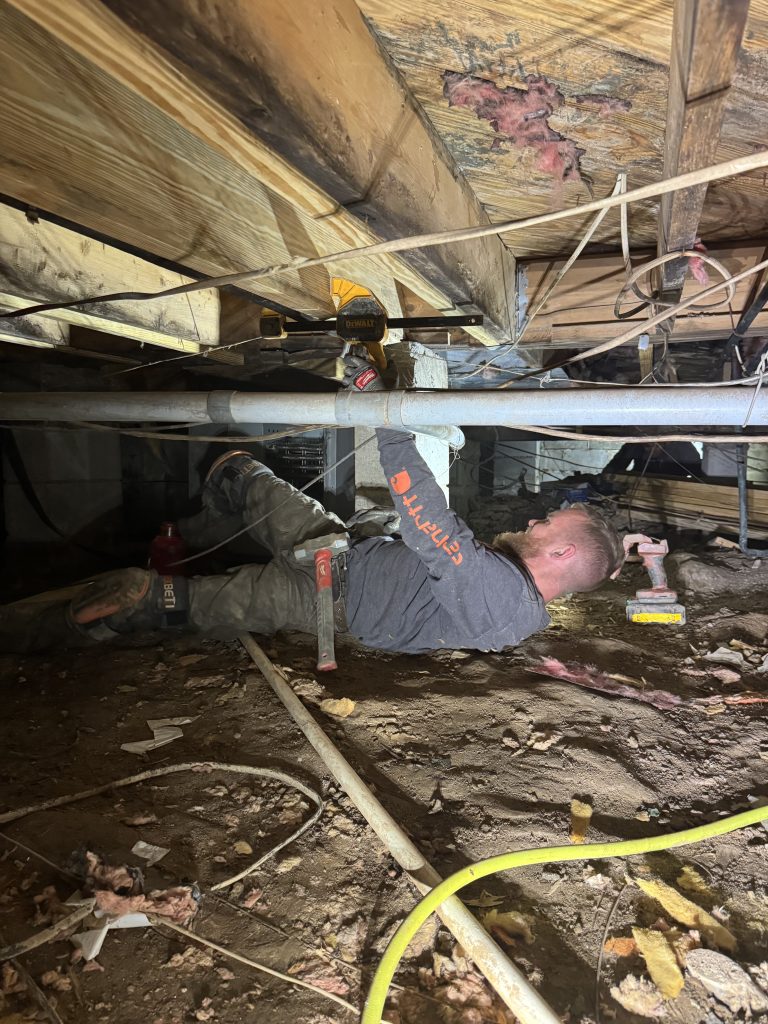
- Termite-damaged floor joists
- Termite-damaged support beams/girders
- Termite-damaged subfloor framing
- Termite-damaged sill plates and rim areas
- Any other compromised structural members under the home
Why an Expert Evaluation Matters
Termite damage can look small in one spot and be more extensive nearby. A proper inspection identifies:
- What’s cosmetic vs structural
- Which members are load-bearing
- What must be replaced vs reinforced
- Whether supports (posts/jacks/beams) should be added after repairs
Our goal is to correct the damage safely and leave the structure stronger than it was before.
Termite Damage Doesn’t Have to Define the House
A home with termite damage isn’t “done.” It just needs the right repair plan. With proper replacement of compromised wood, and the right support strategy, homes can be stabilized and restored. If you suspect termite damage under your home, we’ll help you understand what’s affected and what it will take to fix it correctly.
Why Termite Damage Often Shows Up In Crawlspaces
Termites live in the ground and need moisture to survive. That’s why they often stay close to the soil and build mud tubes (tunnels) to move between the ground and wood framing while staying protected.
Since crawlspaces are close to the ground and often humid, termites commonly target:
- floor joists
- sill plates
- rim/band joists
- support beams/girders
- subfloor framing components
This is also why homeowners often notice symptoms like:
- bouncy or uneven floors
- soft spots in the floor
- new cracks or shifting lines in the home (sometimes)
Structural Repair FAQs
Should I repair damage if the termites were already treated?
Yes. Treatment stops termites, but it doesn’t restore strength to damaged wood.
Do you replace joists and beams affected by termites?
Yes, when those members are compromised and no longer structurally sound.
Will repairing termite damage fix bouncy or uneven floors?
Often, yes, especially if damage is in load-bearing members. Some homes also need added supports after replacement.
What parts of the home do termites usually damage?
Common targets include floor joists, beams/girders, sill plates, rim areas, and subfloor framing near moisture.
Can termite-damaged wood be repaired?
Yes. The damaged structural members are repaired or replaced so the load-carrying system is restored.
Serving Western North Carolina
Foundation and crawl space repair across Buncombe, Henderson, Transylvania, Haywood, and Polk counties, plus the Sylva and Franklin area. Hover a city to see it on the map. Not listed? Call and ask. If we don't cover you, we'll tell you straight.