

Warranty-Backed Foundation Repair
Foundation Repair in Western North Carolina
Mountain homes move differently. Cut-and-fill lots, steep grades, and water coming off the hillside put loads on a foundation that a flat lot never sees. We find out what’s actually moving your house, then fix it with piers, wall anchors, bracing, or carbon fiber sized to the problem and backed in writing.
- You receive a free inspection
- We diagnose the real issue
- We install a permanent solution
Signs to Watch For
Choose Your Foundation Issue
Most foundation problems show up well before they’re serious: a crack that keeps getting wider, a basement wall that’s started to lean, a damp corner that wasn’t there last spring. Pick what you’re seeing and we’ll walk you through what it usually means.
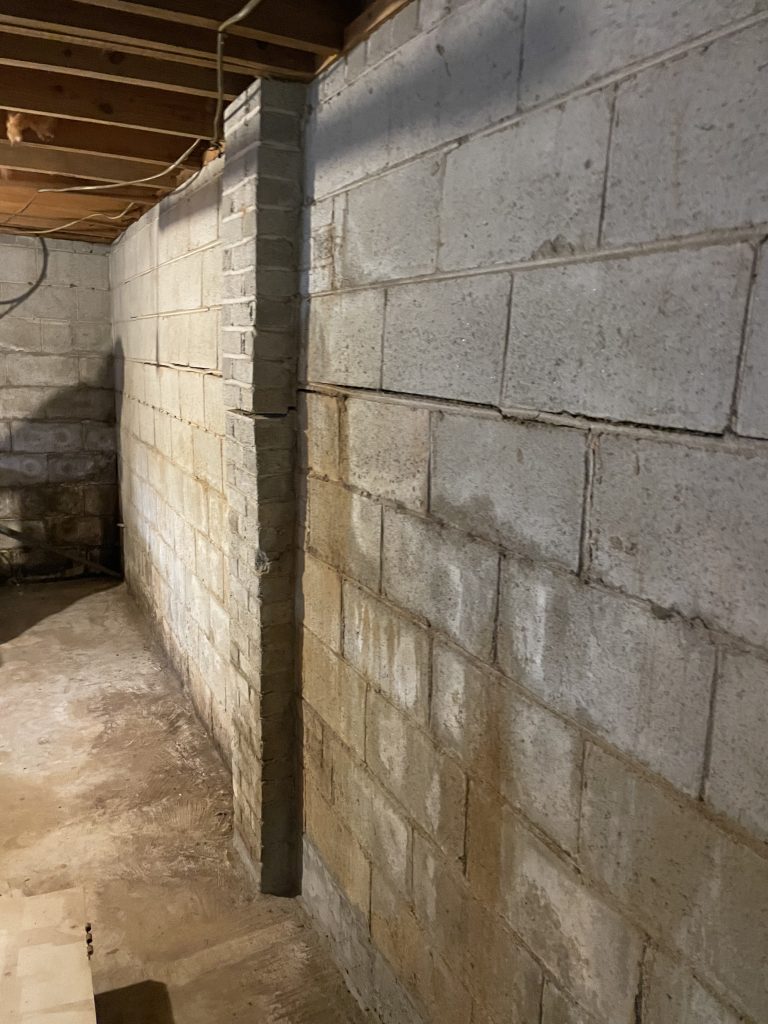
Bowing Foundation Wall Repair
Uphill basement walls hold back the slope behind them. When one leans, the fix is about resisting that load.
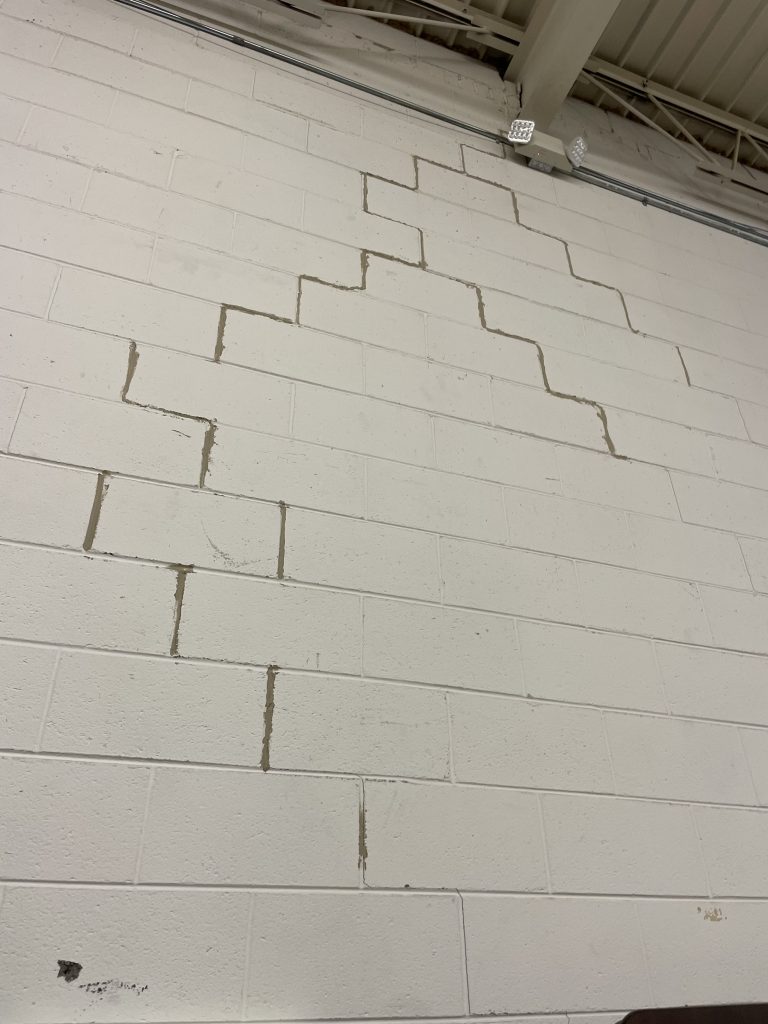
Foundation Wall Crack Repair
Some cracks are just concrete shrinking. Others mean the wall is moving. Direction and width tell us which.
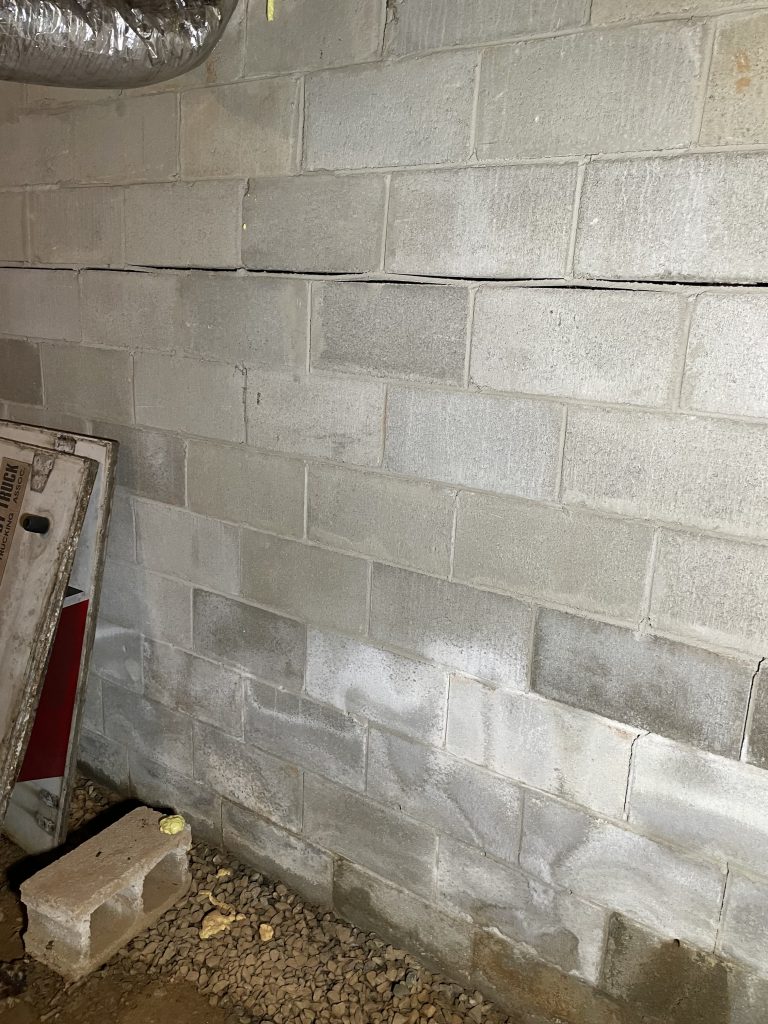
Foundation Water Intrusion Repair
Hillside runoff and groundwater seeps are common here. Damp walls and white mineral staining are the early signs.
Our Repair Methods
Choose Your Licensed & Insured Repair
No single product fixes every foundation. The right repair depends on what the house is built on, how it’s moving, and how much load the wall or footing carries. On mountain lots that often means reaching past loose fill to rock or firm soil, and that decides which system we recommend.
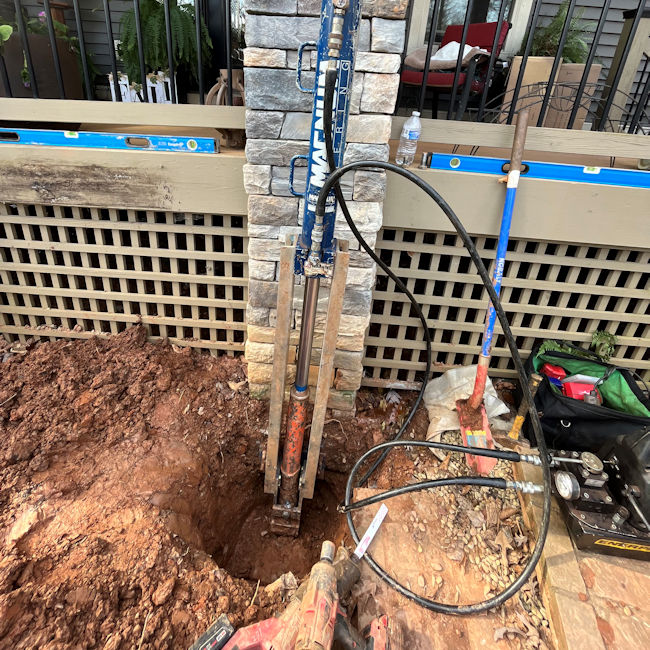
Push Piers
Driven to load-bearing soil or rock using the weight of the house. A strong fit for settling footings under heavier homes.

Helical Piles
Screwed in past fill and soft soil. Our go-to on graded lots, additions, porches, and lighter structures.
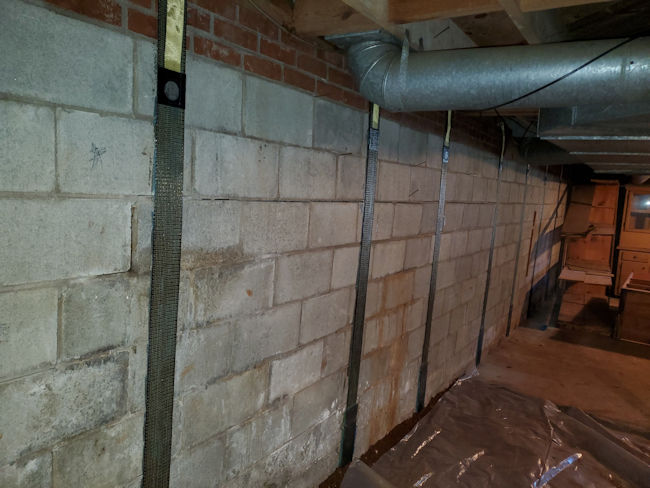
Carbon Fiber Straps
Nearly invisible reinforcement for block or poured walls with early, limited movement.

Steel Beams / Wall Bracing
Steel I-beams fastened top and bottom to hold walls that have moved further.

Wall Anchors / Tiebacks
Anchored into stable soil outside the wall so it’s held in place, and can often be tightened back over time.

Basement Waterproofing
Interior drains and sump systems that manage hillside water and take pressure off the wall.
Why It Happens
What Moves Foundations in Western North Carolina
Building in the mountains usually means building on a slope. Most lots are cut into the uphill side and filled on the downhill side to make a flat pad, and the filled half of that pad is where we see the most settlement. If the fill wasn’t compacted in thin layers when the house went up, it keeps consolidating for years, and the footings on that side go down with it. Meanwhile, the uphill basement wall is working as a retaining wall, holding back soil and the water moving through it.
The soil adds to it. Much of the region sits on soil weathered from the rock below: silty, often full of mica, and quick to erode once water finds a path through it. Add some of the heaviest rainfall in the eastern U.S., springs that surface on hillsides, freeze-thaw at higher elevations, and storms like Helene that saturated slopes across the region, and you get the cracking, settling, and wall movement we’re called out for most. Older homes in Asheville, Hendersonville, and Waynesville bring one more factor: stone and brick pier foundations that were never designed for the loads, or the drainage, they deal with today.
Why Repair Matters
Benefits of a Strong Foundation
Everything in the house sits on the foundation: framing, floors, doors, windows, the roofline. When it moves, all of that moves with it. The good news is that most foundation problems progress slowly, so there’s usually time to make a sound decision, and repairs done early are smaller and cost less. Our job is to tell you honestly whether you’re at that point yet.
Protect Your Property Value
Foundation issues come up in almost every home inspection, and buyers know to look for them. A documented repair with a written warranty turns a negotiating point against you into something that’s already been handled.
Maintaining Peace of Mind
Every repair comes with a written warranty and a crew that works on mountain lots, not just flat ones. We install proven systems, document what we did, and leave your property the way we found it.
Benefits of Repair Homeowners Care Most About
- Stops wall movement before it worsens (bowing, leaning, tipping)
- Protects the structure above (floors, framing, door/window alignment)
- Addresses the real cause (pressure, shifting, weakened support, not just the crack)
- Prevents recurring damage (repairs that keep reopening don’t solve movement)
- Targeted solutions, not full replacement (carbon fiber, bracing, anchors, piers)
- Improves safety and peace of mind (a stable wall is a safer home)
- Helps preserve home value (especially for resale and inspections)
How It Works
Our Foundation Repair Process
Step 1: Inspection & Measurements
We measure wall movement, map crack patterns, check grading and drainage, and figure out what the house is sitting on: cut, fill, or rock.
Step 2: Recommend the Right Solution
You get a plain-language explanation and a written price. That could be piers, anchors, beams, carbon fiber, drainage, or a combination. If your situation calls for an engineer first, we’ll tell you that too.
Step 3: Stabilize & Reinforce
We install, clean up, and walk you through the finished work. Permits are pulled wherever your county requires them.
Straight Answers
Foundation Repair FAQs
What are the signs of foundation problems?
Common signs of foundation problems include stair-step cracking in brick, wide or horizontal cracks in foundation walls, uneven or sloping floors, sticking doors or windows, separation of trim or cabinets, and gaps developing around windows or wall joints. These issues typically indicate soil movement or structural settlement and often worsen over time if not addressed.
How do I know if a foundation crack is serious?
Hairline vertical cracks are often cosmetic, but larger cracks require attention—especially horizontal cracks, stair-step cracks, or vertical cracks wider than 1/4”. Horizontal cracks often indicate inward wall pressure or bowing, while stair-step cracks suggest settlement beneath brick veneer. Cracks accompanied by moisture intrusion or worsening over time should always be inspected by a foundation expert.
What causes foundation settlement?
Here it’s usually fill. Most mountain homes sit on a pad that was partly cut into the hillside and partly built up, and fill that wasn’t compacted properly keeps settling for years. Other common causes are footings that were too shallow or too small, water from the slope washing soil out from under a footing, and saturated ground after big storms.
What causes foundation damage in Western North Carolina?
Slopes and water. The uphill side of a house holds back soil and groundwater, and the downhill side often sits on fill. Our silty, mica-rich soils erode quickly when drainage is poor, parts of the region get very heavy annual rainfall, and storms like Helene left many hillsides saturated or undercut. Older homes on stone or brick piers are also more vulnerable as those supports age.
Are vertical cracks worse than horizontal cracks in my foundation?
Vertical cracks are commonly caused by normal curing or drying shrinkage and are usually less alarming. Stair-step cracks or diagonal cracks are more concerning because they typically indicate settlement. Horizontal cracks are the most serious, particularly in below-grade walls, because they signal inward pressure from soil or water and often accompany bowing or bulging foundation walls.
Can foundation problems get worse over time?
Usually, yes. Most foundation movement is driven by something ongoing, like soil pressure, water, or settling fill, so cracks tend to widen and walls tend to keep moving until the cause is dealt with. The upside is that it’s typically slow, so there’s time to get an inspection and make a clear decision.
Can I live in my house during foundation repair?
Almost all foundation and crawlspace repairs take place beneath the home or along the exterior perimeter, meaning homeowners can safely remain in the house during the project. While the process may be loud or disruptive at times, the living areas of the home are typically unaffected and no relocation is required.
Are foundation repairs permanent solutions?
Most foundation repairs are considered permanent solutions. Many systems allow for adjustments, tightening, and increased security in the future if necessary.
Are foundation repairs worth it?
Yes. If your foundation fails, it can reduce your home’s value significantly or deem the property unsafe to live in.
Start With an Inspection
Not sure what you’re looking at? Start with a free inspection. We’ll tell you what’s happening, whether it needs fixing, and what it would take.
Serving Western North Carolina
Foundation and crawl space repair across Buncombe, Henderson, Transylvania, Haywood, and Polk counties, plus the Sylva and Franklin area. Hover a city to see it on the map. Not listed? Call and ask. If we don't cover you, we'll tell you straight.